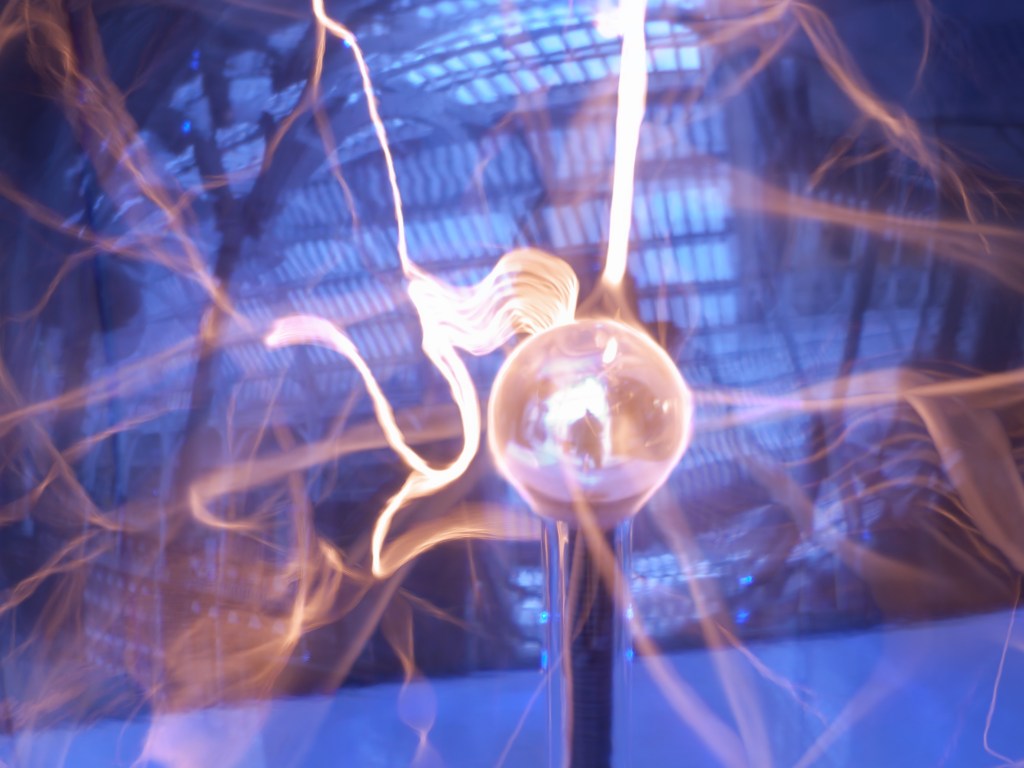
One of the joys of digital photography is trying new things and seeing what happens. Unlike film, it doesn’t cost anything to press the shutter and take a photo, so you can try crazy ideas just to see if they work. When you get home, review the photos onscreen and if they’re unsuccessful, simply reflect on what you could improve them next time. And press delete.
That’s how it was the day I took my infrared camera to the National Museum of Scotland. I’ve photographed this venue many times. Possibly even too many times. I’d never photographed it in infrared though, so on a bright sunshiny day I headed into the Grand Gallery to see what infrared would do to the familiar scene. The results were disappointing. The infrared colours were uninteresting, and if I converted the colours to black and white – well, they simply looked like conventional black and white photos. I got one successful image – a photo of a strong geometric shadow pattern contrasting with the curves of the circular radiators – but there was nothing unique about it. Nothing to suggest the other-worldliness that I was looking for.
Still, the National Museum is a place of many wonders, and as I wandered through the Science Gallery I spotted a plasma ball in a dark corner. Here was my chance to try something new. A silly idea? Possibly. My infrared camera – an ageing Olympus Pen E-P2 wasn’t noted for its low-light performance, and the kit lens only opened to f5.6 on full zoom. But hey! It wouldn’t cost anything, right?
My first half-dozen photos were grim failures, until I had the realisation that the lightning flash was dancing around the globe, making it impossible to capture the movement in a single exposure. Instead, holding the camera as still as possible, I shot five frames – each identical except for the lightning flash.
At home, I used Affinity Photo to open the photos as a stack, and then experimented with blend modes to get the right effect. That was the moment that I rendered this final photo. All in all, a successful morning.
 My Camera Stories
Leave a comment