Of course there are cameras that don’t do bokeh. In the early 2000s, I grew inexplicably fond of Kodak Advantix cameras. Bizarre, I know, but they were lightweight, easily loaded with 35mm film, and they produced “panoramic” images with ease. The cheap cameras I used were also, invariably, fixed-focus; and if there’s one thing that fixed-focus compacts are really, really good at, it’s ensuring that everything is in focus.
But almost any other camera? Hell, I still aim for bokeh when I’m shooting fisheye.
2014 was a transition year for me. Disillusioned by Olympus turning its back on digital SLRs, I bought a Panasonic Lumix FZ150 and started to explore what it could do. And the answer was – a lot. The small sensor limited things, of course. Low-light could be challenging, and shots at the long end of the zoom invariably lacked crispness. But the colours were strong, especially in vivid mode, and I could get punchy results with minimal effort.
With only a 1/2.3″ sensor, you might expect that it struggled with bokeh. Oh, no. With the right subject, it was a bokeh beast. One of the many reasons I loved that camera.
My first serious digital camera was an Olympus E500. Launched in 2005, it had an 8 megapixel CCD sensor that produced beautiful film-like colours. Like all CCD cameras however, the dynamic range we severely limited, and noise quickly started to become an issue when you went above 400 ISO. I loved that camera, and when I briefly replaced it with an E620, I found the E620 a big disappointment.
The 12 megapixel sensor of the E620 was, on paper, a big improvement. But the colours lacked that Olympus magic. And crucially by this time, the writing was on the wall for Olympus DSLRs. Olympus was ready to abandon the Four Thirds format and replace it with Micro Four Thirds – essentially very similar cameras using the same sensors. but in a smaller rangefinder-style mirrorless body.
Disenchanted, I abandoned Olympus and spent the next few years shooting a succession of Canon bridge cameras and Sony compacts.
Years later – and now an Olympus shooter again thanks to the OM-D EM10 Mark II – I decided to dip my toes back into some of those old rangefinder-style Pen series cameras. It was a frustrating journey, leavened thankfully by the fact that early Olympus mirrorless cameras were cheap to buy on the second hand market. It was easy to buy an old Olympus, shoot with it for a few months, and sell it on for the same price as I had paid for it. I quickly established my likes and preferences among the early Pen cameras.
Olympus Pen E-P1 (2009) – Oh, those Olympus colours. Beautiful. But that low-resolution rear screen made shooting in bright sunlight very difficult.
Olympus Pen E-P2 (2010) – Essentially a P1 with the ability to add an external viewfinder. I still have one, adapted to infrared, but I don’t recommend it unless you’re willing to splash out on the optional electronic viewfinder, which makes it a much more pleasant shooting experience.
Olympus Pen Mini E-PM1 (2011) – A very nice wee camera, highly recommended if you’re looking for something pocketable. But the lack of dials and buttons make it more of a point and shoot than a serious enthusiasts camera.
Olympus Pen E-P3 (2011) – This was a major refresh of the Pen range. An updated processor (TruePic VI) made noticeable improvements to noise performance and focus speed. And – ignored by many reviewers – the speed of navigating through menus became noticeably snappier. A nice camera, and the only 12 megapixel Olympus that I would happily use today as a regular-carry camera.
But what about those Olympus colours? The Panasonic 12 megapixel sensor may beat the Kodak CCD for noise and dynamic range, but it can’t match it for colour renditions, surely? Well, no. It can’t. But using the Vivid colour mode, and slightly increasing the contrast, it gets pretty close.
Japanese Acer in full autumn colour, photographed at Dawyck Botanic Garden in the Scottish Borders. Olympus Pen E-P3, Olympus M.Zuiko 14-42 EZ. Processed in OM Workspace to match original in-camera rendering.
Two stonechats, Musselburgh Lagoons, October 2025. Olympus EM1 MII, Olympus M.Zuiko 75-300mm
Birdwatchers’ Facebook in the Lothians has been all of a twitter over the past ten days or so. Storm Amy, like all good storms, blew large numbers of birds off course. The result was a flurry of rarities at Musselburgh Lagoons – my local birding patch. A Marsh Sandpiper was the real highlight. That’s a genuine rarity wherever in the UK you see it. Spotted redshank, a large group of barnacle geese and a lone spoonbill were all duly spotted and added to my notes.
That spoonbill, though – a photogenic bird for sure, but it was way too distant for my camera. Hence a second trip on a Sunday afternoon with the express purpose of bagging a photo of the Musselburgh Spoonbill.
Inevitably, I was unsuccessful.
Oh, I saw the marsh sandpiper again, so the afternoon wasn’t exactly a washout. And I enjoyed an afternoon of birding in fabulous light – the sort of mild autumn day that makes you glad to be out and about. But the spoonbill, I was reliably informed, had been seen in Falkirk. Oh well.
Walking home by the sea wall, I spotted two birdwatchers pointing their binoculars inland – in the “wrong” direction. I followed suit, and was rewarded with a beautiful sighting of a stonechat sitting on an old graffitied sign. I couldn’t be that lucky, surely? But by the time I got my camera out of my bag, far from flying away, it had been joined by another bird. Two stonechats. Nice. All I need now is a photo contest on the theme of urban nature.
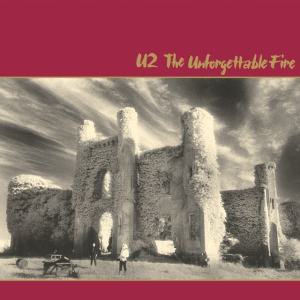
If you know The Unforgettable Fire by U2, you’ll know it’s a solid album — but it’s the cover photo that really sticks in the mind.
What’s most interesting to me is that the photo wasn’t the photographer’s original idea. Anton Corbijn, who shot the cover, had come across an image of Moydrum Castle in a book called In Ruins: The Once Great Houses of Ireland by Simon Marsden. Something about Marsden’s photograph clearly stayed with him, because Corbijn’s shot of U2 standing in front of the same crumbling castle is almost an exact recreation of Marsden’s original.
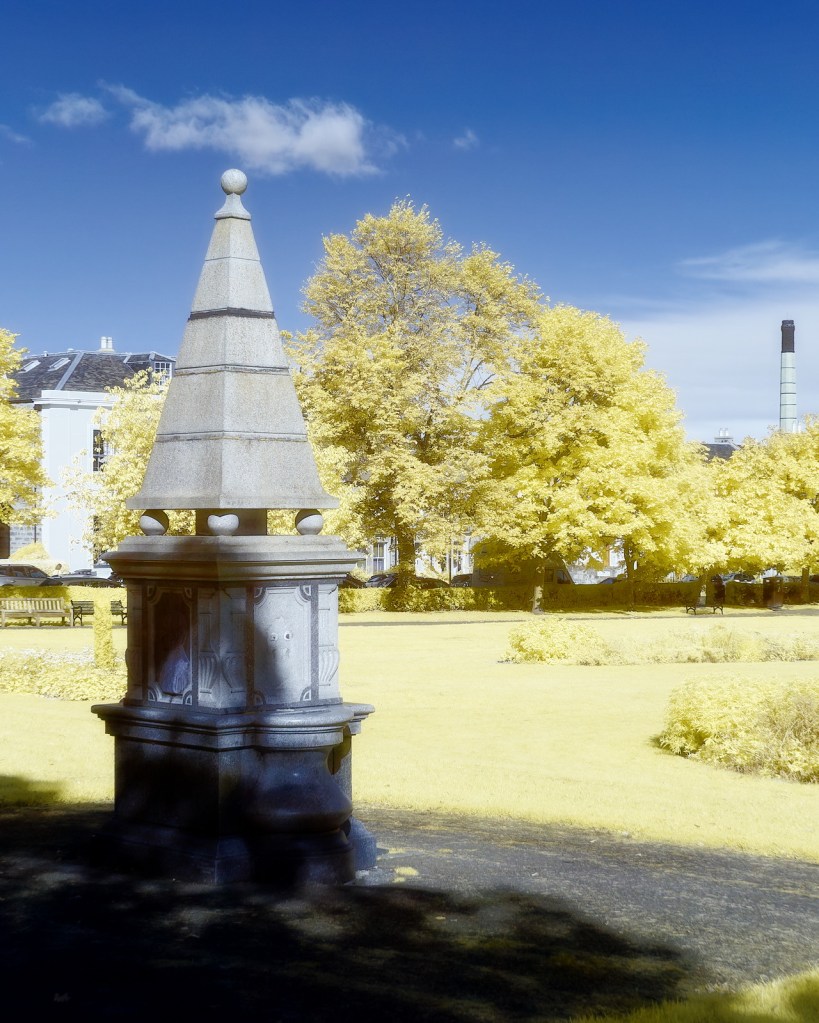
If Marsden’s picture inspired Corbijn to experiment with infrared film, then it was Corbijn’s version, 35 years later, that inspired me to hit “buy” on an adapted digital infrared camera.
Here’s the thing about infrared: it’s tricky.
As photographers, we’re used to looking at a scene and having a fair idea of how the final image will look. Infrared throws all that out of the window. It sees light in a completely different way, revealing things the eye can’t, and making familiar places look otherworldly.
I’ve been shooting infrared for about seven years now, and I’m still learning. But when I first picked up that Olympus Pen E-P2 in 2019, I was completely clueless. I’d purchased a camera with a 590nm infrared conversion, knowing that it could produce those surreal yellow leaves and pale blue skies, but I had no idea how to actually achieve that look in post-processing.
So on a bright sunny day, I took the camera to my local park and fired off a few test shots. I wasn’t expecting much – and true to form, I came home with a handful of very average photos.
Every journey has to start somewhere, though. Bit by bit, I learned how to white balance in-camera, how to expose properly for infrared light, and how to channel-swap the RAW files in Affinity Photo so those magenta skies could look a little more natural.
Daisy Park, Portobello, Edinburgh. Olympus Pen E-P2 adapted to 590nm infrared, Sigma 30mm f2.8.
This was the first infrared photo I ever took. It’s not going to win any awards — but it was the start of a journey down a fascinating rabbit hole that I’m still exploring today.
Picture the scene. I am standing underneath an old railway clock with a group of friends. The railway station is long-gone, over 60 years ago. The clock isn’t even in its original location because it’s been relocated to the side of the road, a victim of Edinburgh’s relentlessly increasing traffic.
This is a regular catch-up with this particular group of friends. Once a fortnight, we meet at a different location in Edinburgh to photograph – well, whatever we fancy. We all have our different likes and dislikes. I enjoy photographing urban grit. Others prefer to shoot flowers, plants, colour. So we mix it up. One week, we’ll visit a park. Next time, perhaps a busy part of the city.
This week it’s the turn of the city. Morningside Road is surely awash with photographic interest. Shops, people, movement all around. But no, I’m not inspired, and few of my friends are faring any better. When I call it a day after about an hour, I head to a coffee shop where some of my friends have already finished their coffees and are ready to explore Morningside’s (admittedly excellent) charity shops.
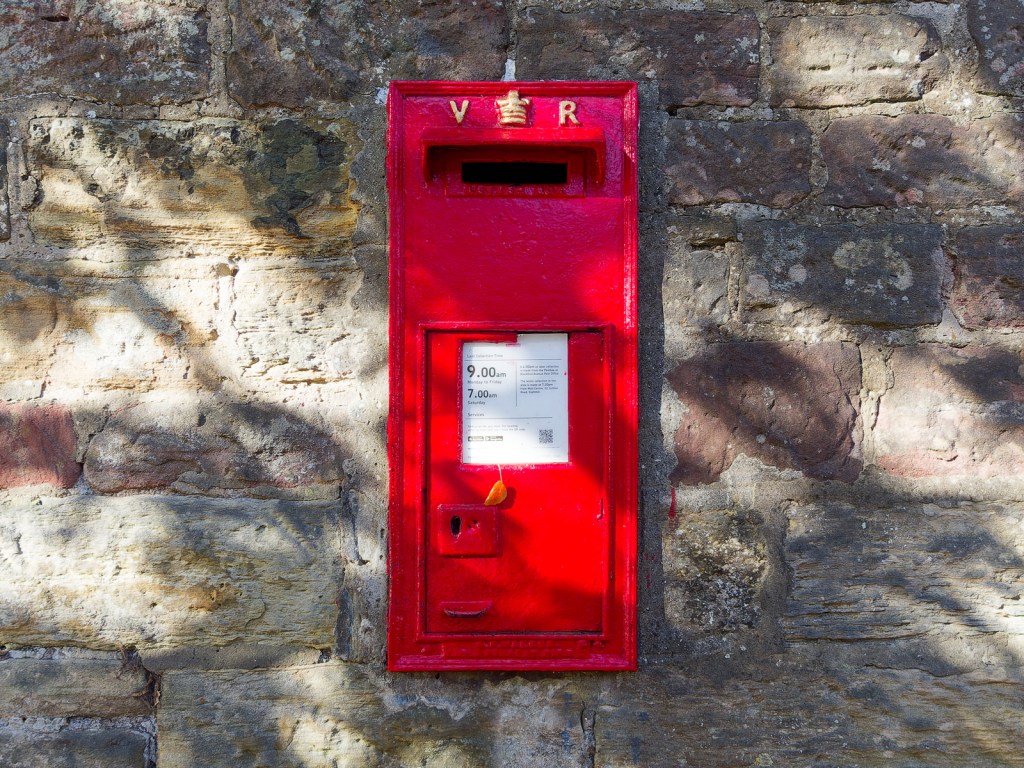
Oh well, not every day is full of inspiration. At least I got a pretty picture of an old Victorian post box.
An old Victorian letter box. Olympus OM-D EM10 Mark II, Olympus M.Zuiko 9-18mm.
At my camera group yesterday, we had a fascinating conversation about skies. As we critiqued each other’s photos, John repeatedly made the comment that there was too much sky in our photos. When John says something like that, you listen to him. Not just because he’s an experienced photographer but because he’s an experienced judge, with dozens of club-level photographic competitions informing his opinion.
And yet, several of us disagreed with him.
Some rules-of-thumb from club-level camera completions make good sense:
Make sure the horizon is straight
Make sure the photo has a clear subject
Follow the rule of thirds (or if you break it, make sure it’s obvious that you’ve deliberately broken it)
Use leading lines
Ensure the photo is free of distractions
Make sure the exposure is correct
The main subject must be in focus (or if it isn’t in focus, it must be deliberately and clearly out of focus)
Avoid cliches, etc
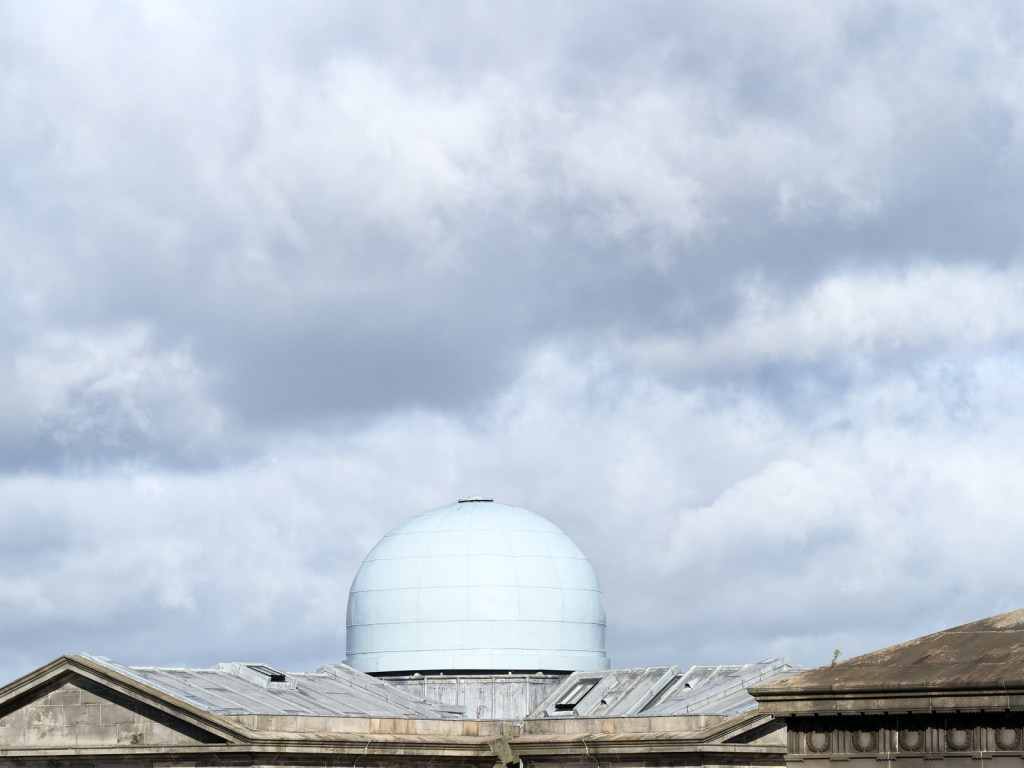
I think the rule that we were breaking was – in John’s view – “make sure the photo has a clear subject”. Look at this composition. Is it a photo of the sky, or a photo of the dome? If the answer is both, then the photo doesn’t have a clear subject. And if it doesn’t have a clear subject, is it a good photo?
Dome at Edinburgh Royal Observatory, Calton Hill, under a moody Scottish sky. Olympus EM1 Mark II, Olympus M.Zuiko 14-150 Mark II
Well. John was in a minority. We’re not into entering photo competitions. We’re just a group of friends who enjoy taking photos together. And when you live in Scotland – a country known for its characterful skies – well. it would be silly not to take advantage.
I do agree with John on one thing though. I’d never enter this image into a photo contest.
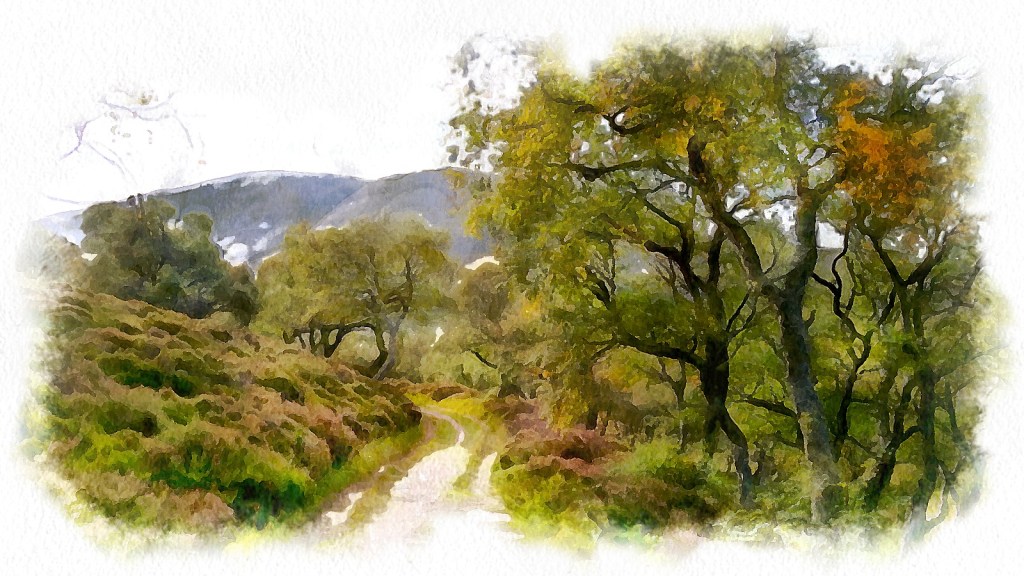
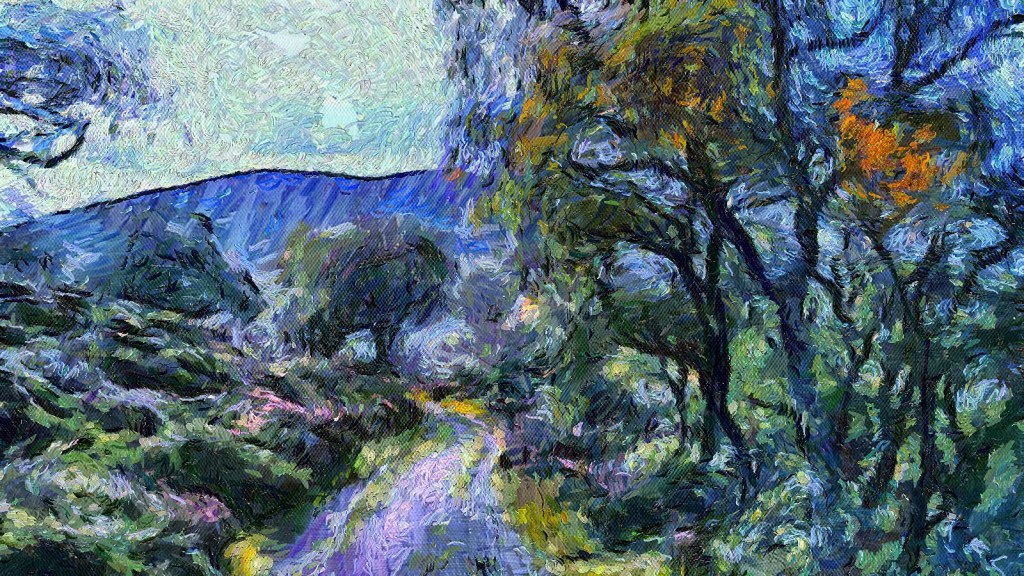
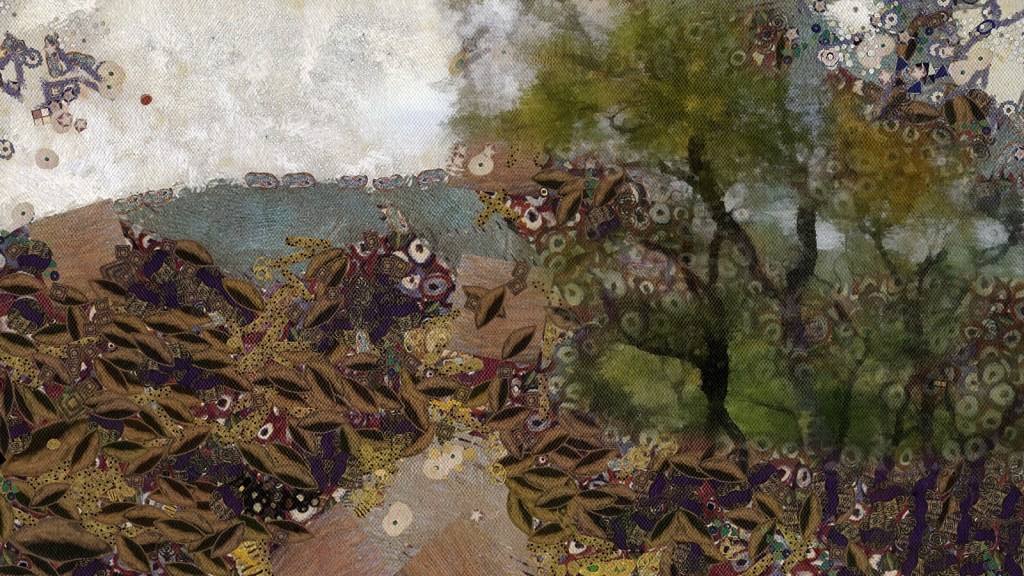
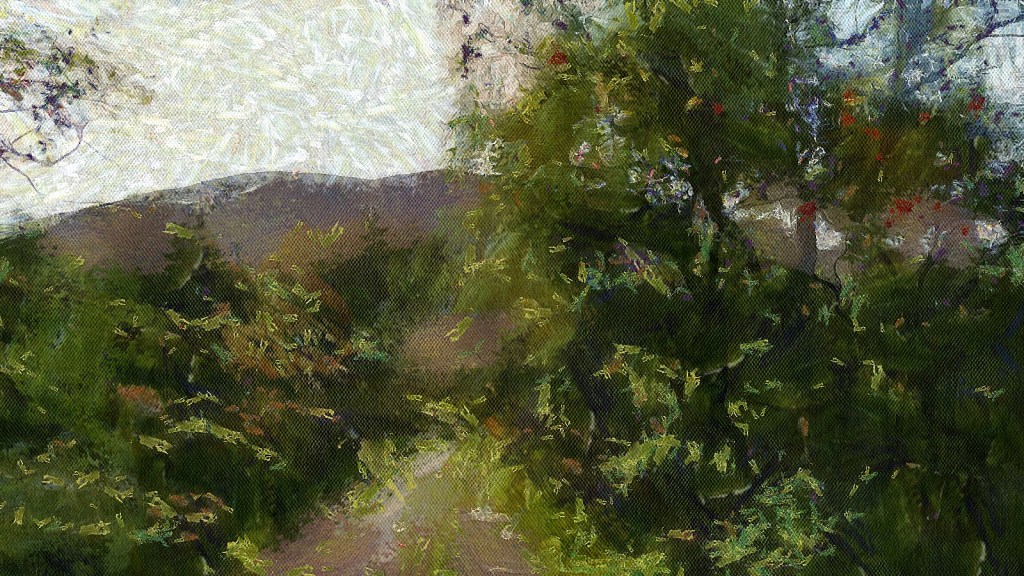
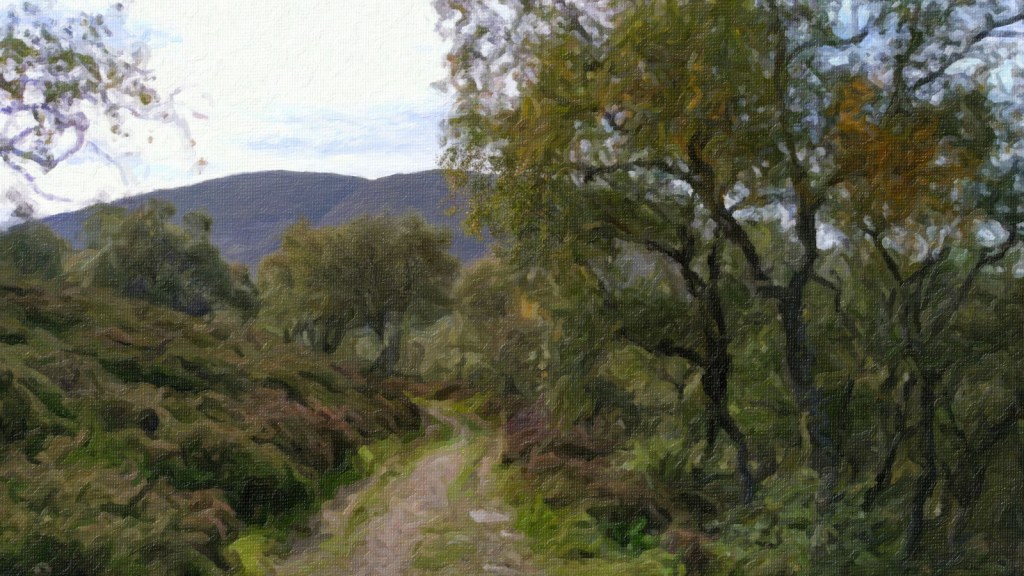
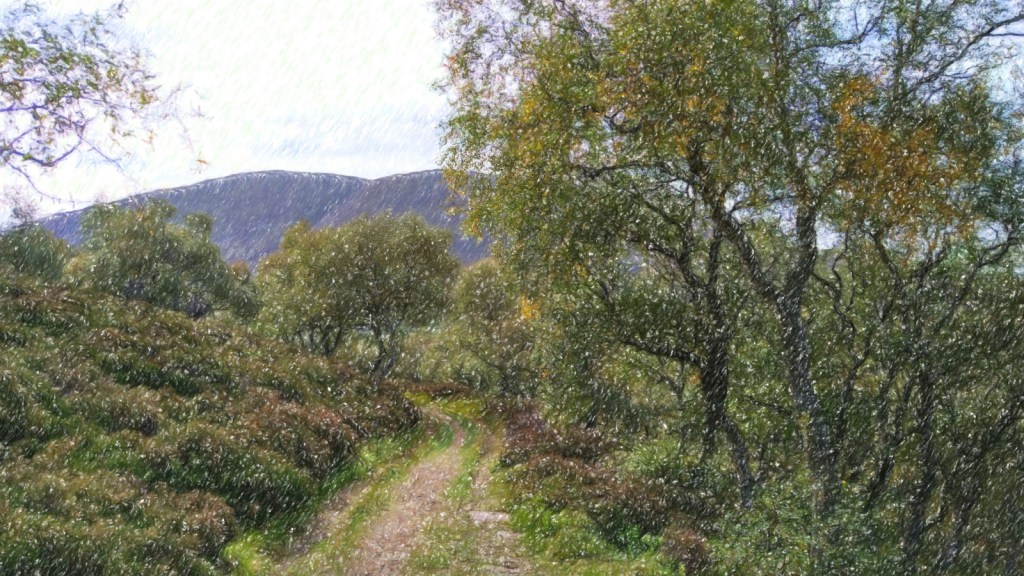
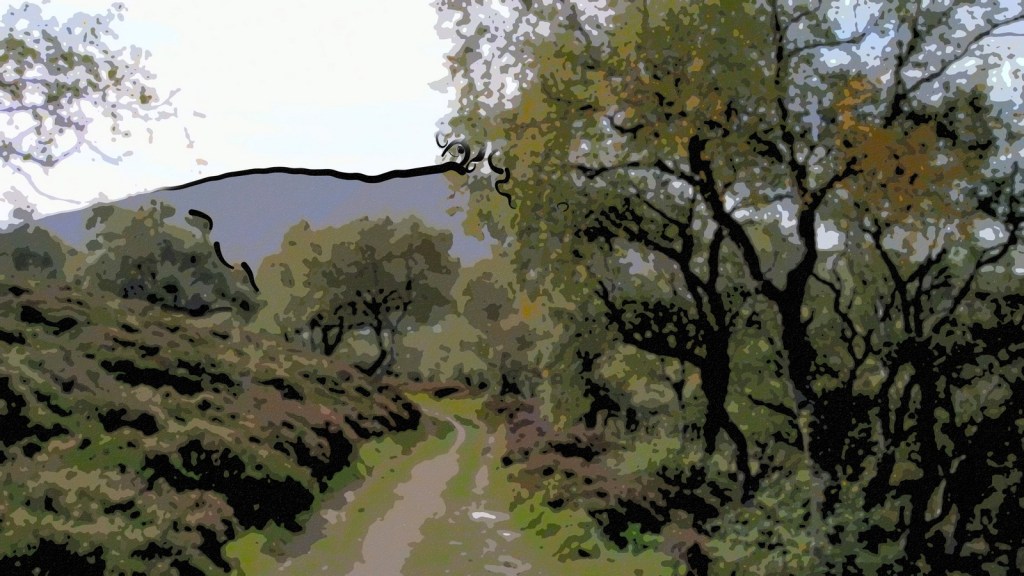
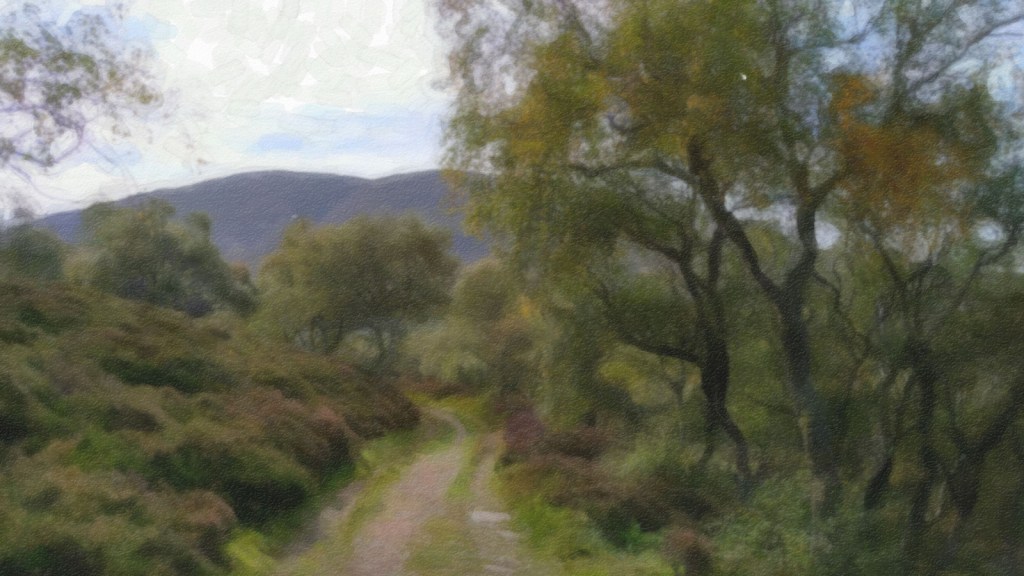
These days everything is about AI, but before neural style transfer came along there was a small, lively scene of procedural painting engines. These programs used algorithms to turn photos into digital paintings. Some have since been abandoned, while others are still being developed. All of them are great fun to explore. Here are some of my favourites.
I don’t have them all installed on my laptop – but for those I do, I’ve included an example image.
Dynamic Auto Painter
Commercial product. Quite expensive, with occasional sales. Still actively developed. I’ve listed this one first because it’s my favourite. It has lots of presets, and is able to do oils, watercolours, pastels, and lots more. It’s quite slow. Like many auto-painting products, it renders the brush strokes in real time. Depending on your mood, you might find this relaxing or frustrating, but you can always set the canvas size to small – which paints this images much more quickly – to try out multiple presets, and than change the canvas size to large once you’ve found the style you like.
It’s quite complex to learn, and I’ve probably done no more than dip my toes into its capabilities, but the many presets give you a great starting point, For most people, there’s probably no need to dive any deeper.
Aqua Real presetVan Gogh 7 presetKlimt presetMonet Preset
Corel Painter Essentials
Commercial product. Inexpensive, and frequently discounted. Last updated 2023, and unclear whether it’s still being actively updated. There are far fewer presets here, but the unique advantage of Corel Painter Essentials is this it includes a cut-down – and vastly simpler – subset of the digital painting tools available in the full version of Corel Painter. This allows you, once you have selected your preset and let the program do its thing, to jump in with your own brushes and add your own brushstrokes, seamlessly integrated with the rest of the digital painting.
FotoSketcher
Free, and still actively developed. It’s like a cut-down version of Dynamic Auto Painter. This one’s way better than you would expect for the price. Very basic interface, perhaps, but all the tools you need are there. As a bonus it’s a small download, and is very forgiving of older computer setups.
SnapArt
Commercial product. It’s unclear whether it’s still being developed, and it hasn’t been updated for many years. Quite overpriced, though I suppose the price is reasonable if you buy it in a bundle with some of Exposure Software’s other products. The advantage of this one is the ease of use, the wide range of styles which it can output, and the fact that its hardware requirements are very basic. That price though!
Commercial product – discontinued and no longer sold, though it can still be downloaded from the Topaz website as legacy software. Now let me tell you something odd because while I’ve bought other Topaz products, I’ve never bought Topaz Studio 2. But when I logged into the app using my usual account credentials – intending to enjoy the 30 day trial – a message popped up onscreen stating that the software was “fully licensed”. Surely some mistake?
But no, several months later, it was still working. Does that mean that Topaz is allowing anyone to use it free of charge, now that it’s been abandoned. Did I qualify for a free licence at some point when buying other Topaz software? I have no idea, but I’ve seen other people hinting at similar experiences on Facebook. Who knows? Maybe it’s worth a try?
Well actually, my experience with Topaz Studio 2 has been quite poor, and I’m unsurprised that Topaz abandoned it. I realise that this puts me out of step with many other users who still lament the fact that it’s no longer updated. But for me, Topaz Studio 2 tries too hard to do everything. If you’re looking for an all in one solution – from basic photo processing to finished painting – it’s definitely worth a try. But other auto-painting software is better at the core job of creating digital paintings from original photographs.
Jixipix Software
Commercial products – still actively updated. Prices vary, with occasional sales giving very good discounts.
Jixipix has a whole suite of digital painting software, so it’s a great choice if you’re only interested in one style. The products I have experience with are Impresso Pro (oils) and Watercolor Studio. Both are excellent, if you can forgive the slightly dated interface. Costs can quickly mount up if you buy multiple apps, so check bundle pricing before committing.
Picture CDs – not to be confused with Photo CDs – were widely offered by film processing labs in the early days of digital photography. They were fairly inexpensive. I usually got my films processed at Boots, which charged an extra £1.99 for a picture CD.
Quality, unfortunately, was variable. If you were lucky, you got a good clean scan that was very usable – albeit only 1.5 megapixels. If you were unlucky, you got an unusable mess. Still, at least the lab always returned your negatives, which gave you a second chance to try at home with your own scanner.
Digital scans from APS – which I used extensively at the time – were even lower resolution. And because of the smaller negative size, quality suffered. Images could be grainy and lacking in sharpness. And of course, regardless of the format you were shooting, colour accuracy was hit and miss.
The original lab scan, showing poor colour accuracy and excessive grain
This image from 2002 is typical. It’s a good clean scan, with no dust or scratches, but the colour accuracy is too warm and the image suffers from excessive grain. Still, in these days of AI-enhanced photo editing, both issues are easily resolved. I resized and denoised this image in On1 Resize AI 2026, and then took it into DxO Photolab for colour grading. The result is a big improvement. At 8 megapixels, this new version is big enough for a 16 inch print. It has more accurate colours, and the excessive noise has given way to a more natural film texture from the Kodak Advantix Ultra film.
After careful editing, with more accurate colour and more realistic grain – an image good enough to hang on my wall
Do you still have any Picture CDs tucked away at the back of a drawer? Dig them out – the quality may be better than you remember,
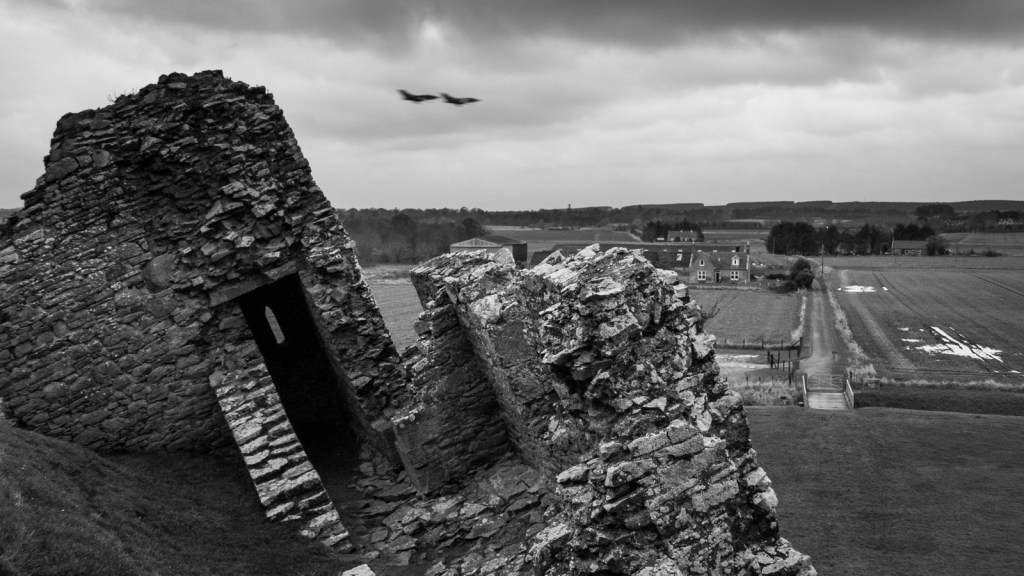
Duffus Castle, near Elgin, North East Scotland. Two blurred fighter jets fly past. Shot on Olympus E500 with kit lens.
Around 2007, when Flickr was absolutely at its height, I uploaded this photo of Duffus Castle, Morayshire, to a group which was dedicated to photo critiques. The rules were simple: post a photo of your own which you wanted critiqued, and give a critique of the three preceding photos.
One of the critiques I received came from a contact in Arizona who commented that it was “very dark” and the “shadows needed opening up”. Fair comments, and the photo posted here has been re-edited to take that feedback into account. But what I found most interesting was that the comment came from someone who – as I discovered when we continued to exchange messages – lived in the desert. For her, the challenges she faced all related to the light. Massive dynamic range, extreme clarity, harsh sunshine.
For me, too, the challenges related to the light. This photo was taken at the tail-end of November, on a day when cloud and rain meant that it never got properly light. Even at 3:30 in the afternoon, the light was dim, lifeless, and lacking in contrast. There was little colour in the scene. All of that grass just looked flat and grey.
And yet the scene was compelling. Even in the dreich Scottish autumn, the photo works on three levels. In the foreground, the ruins of Duffus Castle captures feelings of both endurance and fragility. Yes, the castle ruins are still there, still standing. But they are also slipping away, the walls sliding down the ancient motte.
In the background, two fighter jets (Eurofighter Typhoons?) are a fleeting presence, blurred by speed against the unchanging landscape. They speak to 1,000 years of military advancement, from local skirmishes in the late middle ages to the complex diplomatic web of 21st century politics.
In the middle ground, the farm buildings anchor the image in everyday life. This was farmland when the wooden castle was first erected in the 12th century. It was still farmland when the stone-built castle was inhabited in the 14th to 17th centuries. And it’s still farmland today.
Amongst all the landscapes I’ve photographed: hills and glens, sun and rain, this is probably one of the most Scottish photos I’ve ever taken.
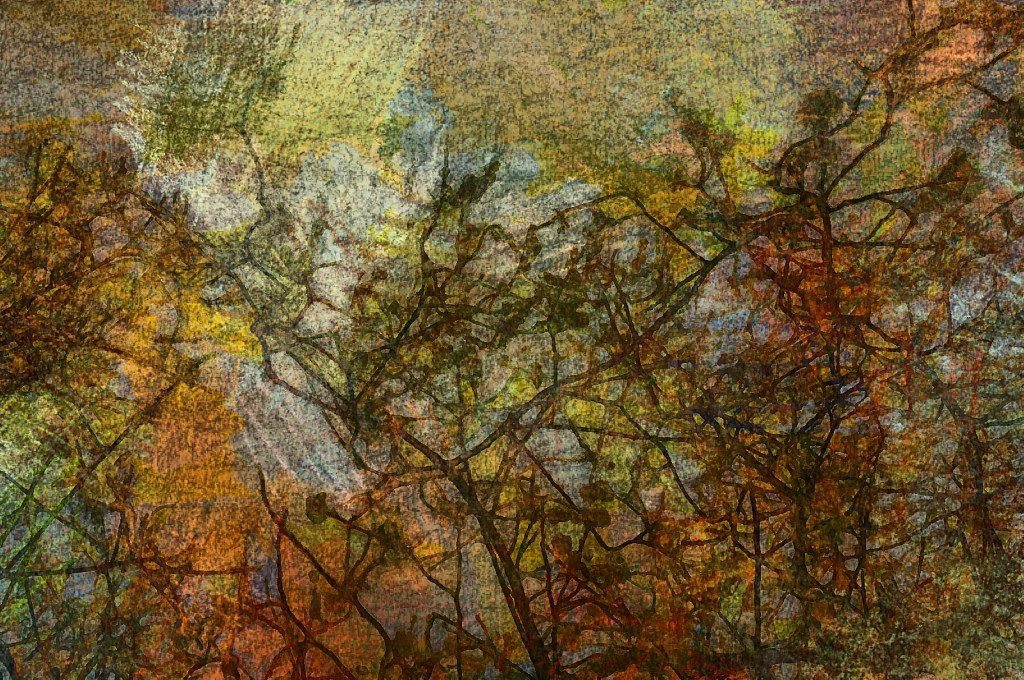
Fractal Blossom, 2024 – created digitally using Dynamic Auto Painter and Affinity Photo
A recent article in Amateur Photographer described post-processing as the most ignored part of photography. In my experience, that’s very true. Among my photography-minded friends, the folk who prefer their photographs straight out of camera significantly outnumber those who tweak and tinker with their images.
Is either approach to be preferred over the other? Well no, of course not. These are our photos, it’s up to us to decide how we present them. And yet for me, straight out of camera rarely works. That’s why I shoot RAW and process my images before sharing them. Sometimes my edits go too far. I look back at some of the over-saturated, high dynamic range images that I was producing in my early days using Paintshop Pro, and I shudder at my naivety.
But taken much too far, over-editing becomes a conscious decision, moving further and further away from reality. Keep moving in that direction and you end up with Fractal Blossom which, according to my notes, started out as a photograph of spring blossom. Is it photography? No, but it’s mighty pretty, and it was a whole lot of fun making it. I wonder if I could get it made into a fabric?